Love under geological pressure began as an intuitive pull to reconnect with the living rhythms of the Scottish Highlands and over time developed into a deeper sense of relatedness, grounded in intimacy and belonging. Through sustained, sensuous encounters with its temperate rainforests and mineral landscapes, slower biological rhythms, permeability and elemental exchange were experienced not only as ecological conditions, but as ways of communing with the living world.
The lichens found there hold deep histories extending far beyond their observable forms. Millennia of environmental disturbance and centuries of atmospheric change have rendered many ecological rarities, their sensitivity to shifting conditions making them particularly vulnerable amid accelerating biodiversity loss. Casting these organisms in bronze invokes the material’s connection to this history, transforming a substance associated with habitat destruction into one that preserves the beings it displaced. Their monumentalisation honours lives whose significance might otherwise remain overlooked.
The sculptures became a means of prolonging the encounters that shaped them. Through the slow labour of making, each organism was met with sustained attention, care and contemplation, allowing a more intimate relationship with these beings to develop as their intricate beauty, complexity and profound strangeness gradually unfolded. To be with these forms is an invitation to receptivity, where a softening of focus gives way to a state of absorption in their primordial presence.
Exhibited as part of the Royal College of Art show in 2026
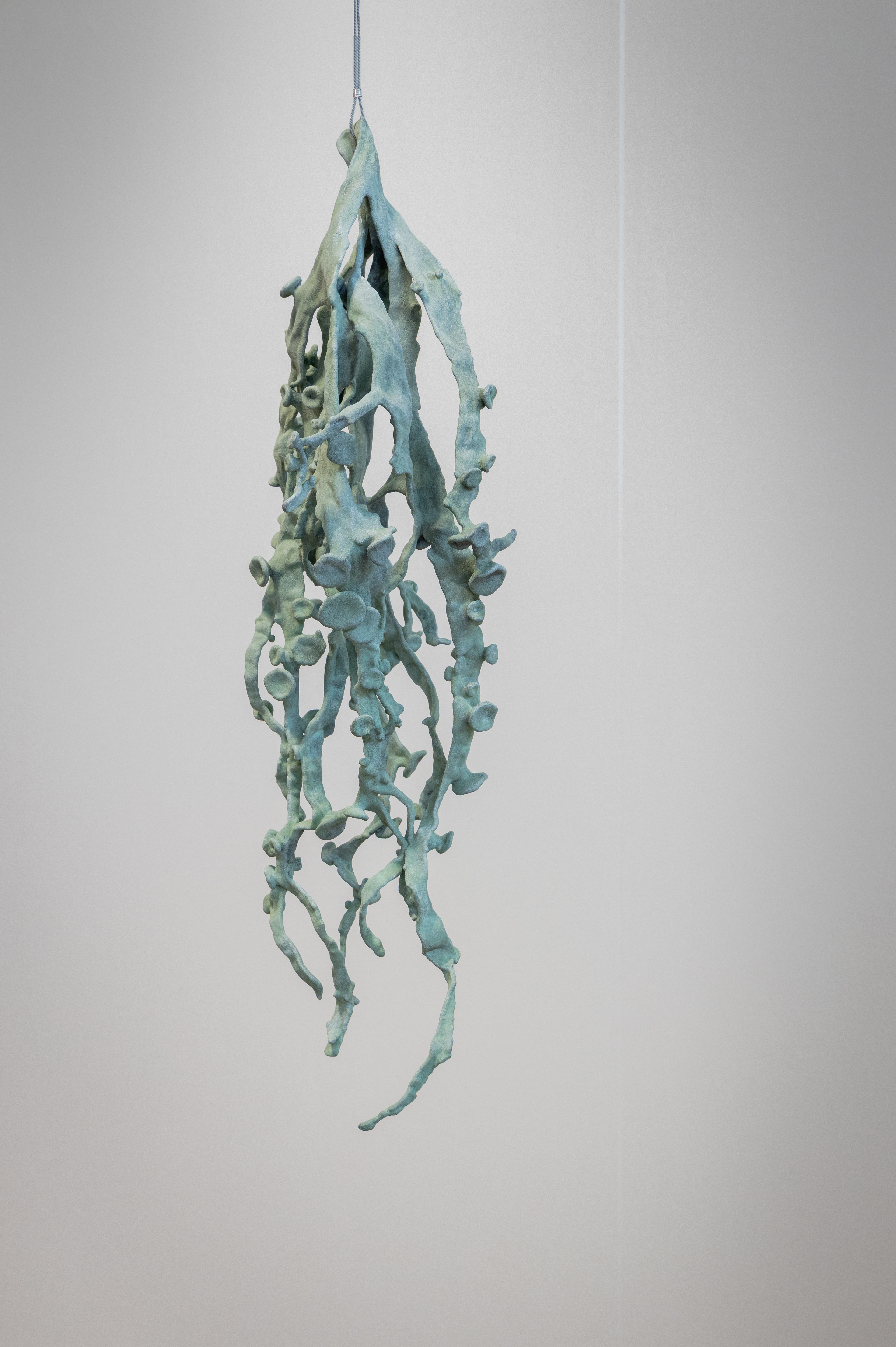
the witness of slow worlds (Ramalina fraxinea), Bronze, 59x22cm
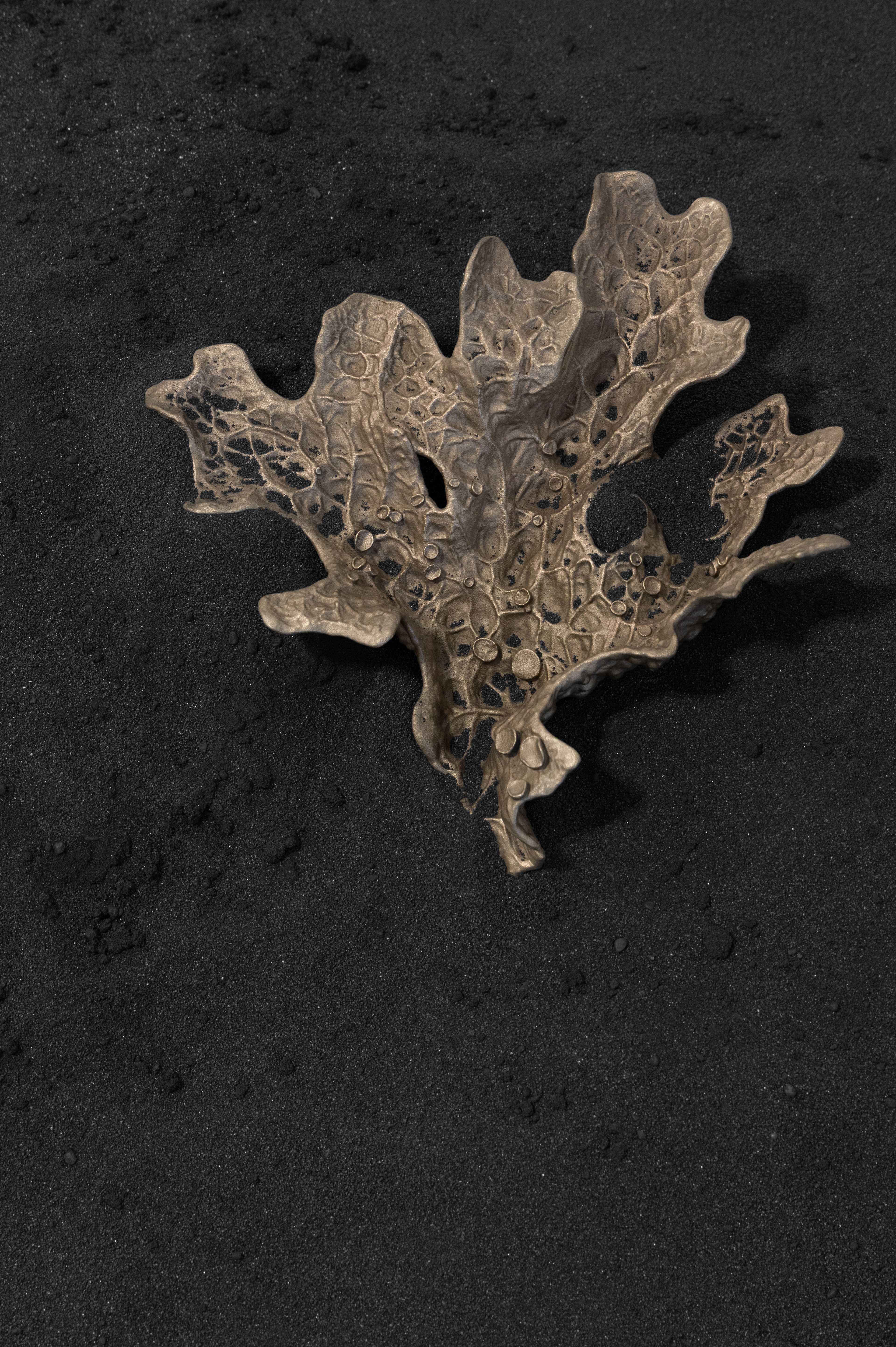
elemental organ (Lobaria pulmonaria), Bronze, 35x34cm
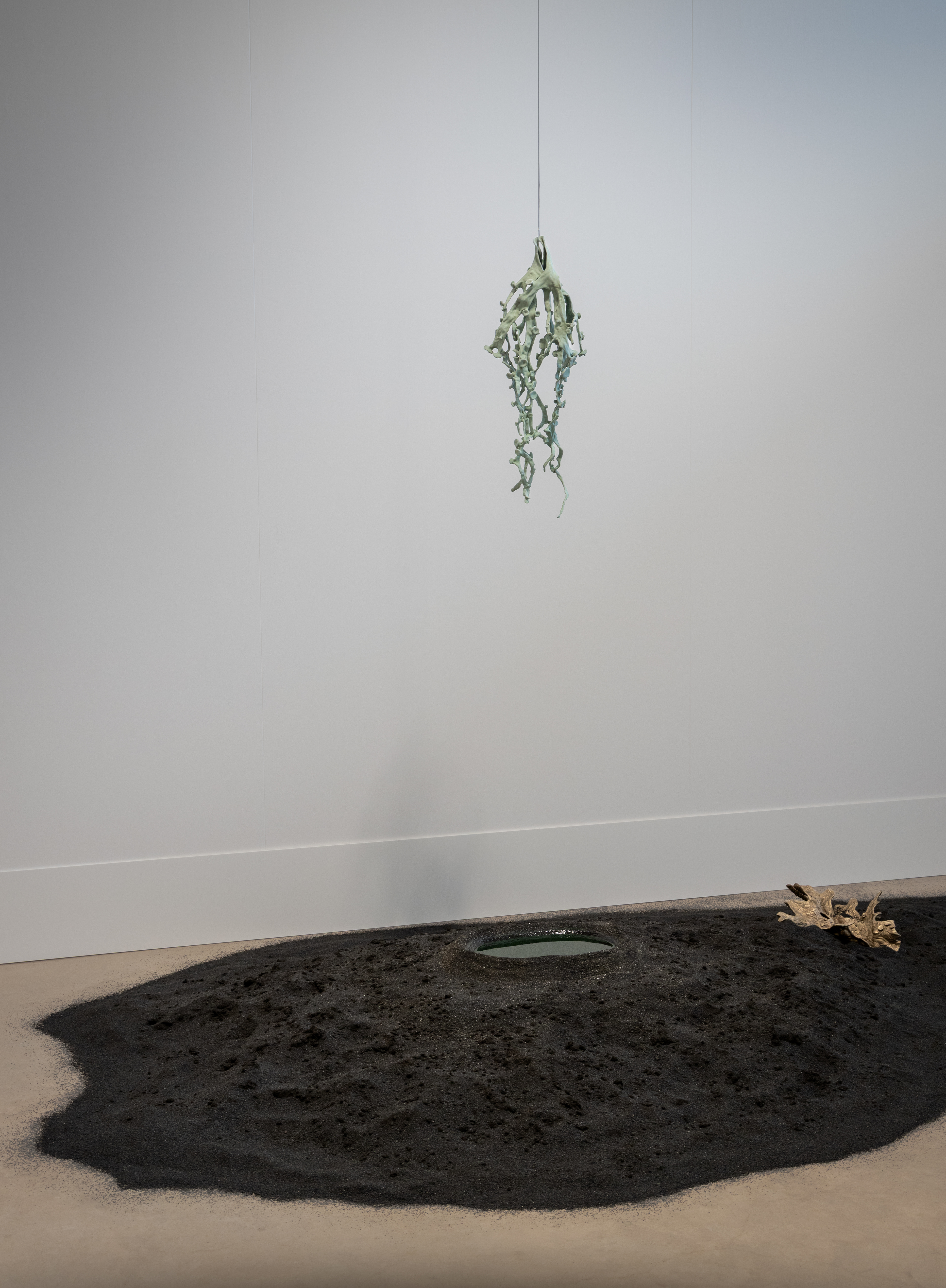
Love under geological pressure, Bronze, volcanic sand, live algae and scent, Installation – dimensions variable
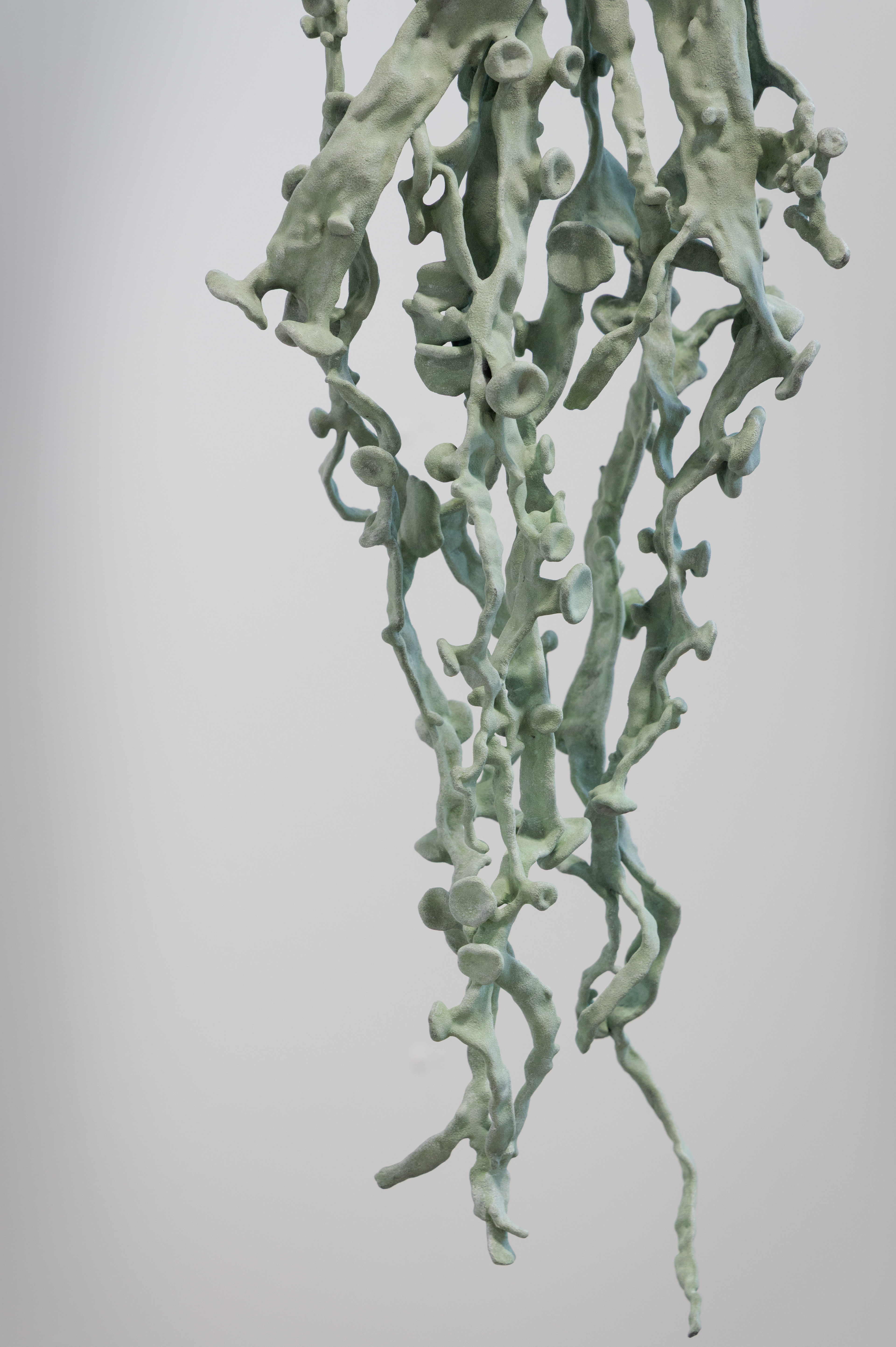
Close-up of the witness of slow worlds (Ramalina fraxinea)
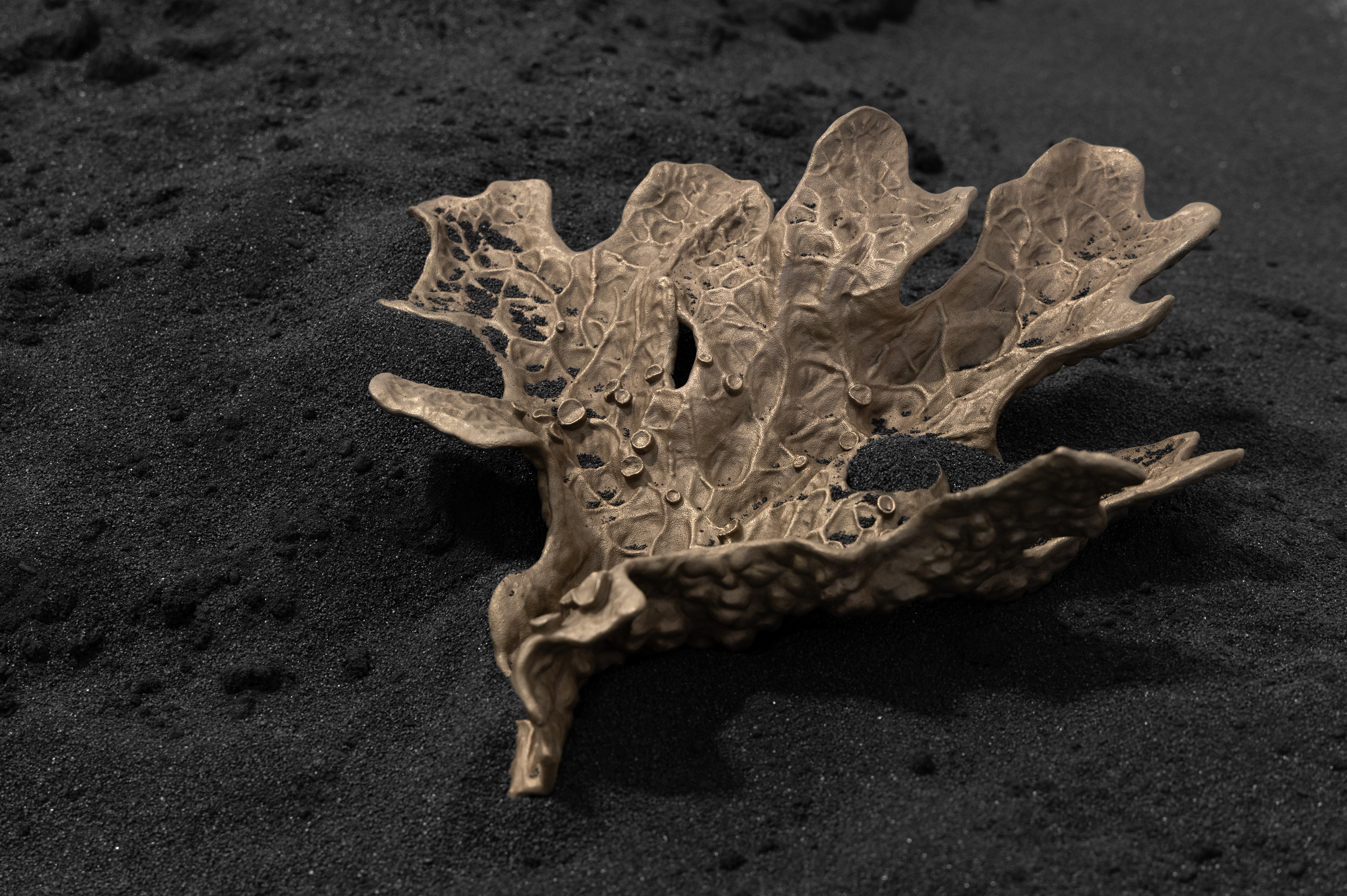
Close-up of elemental organ (Lobaria pulmonaria)
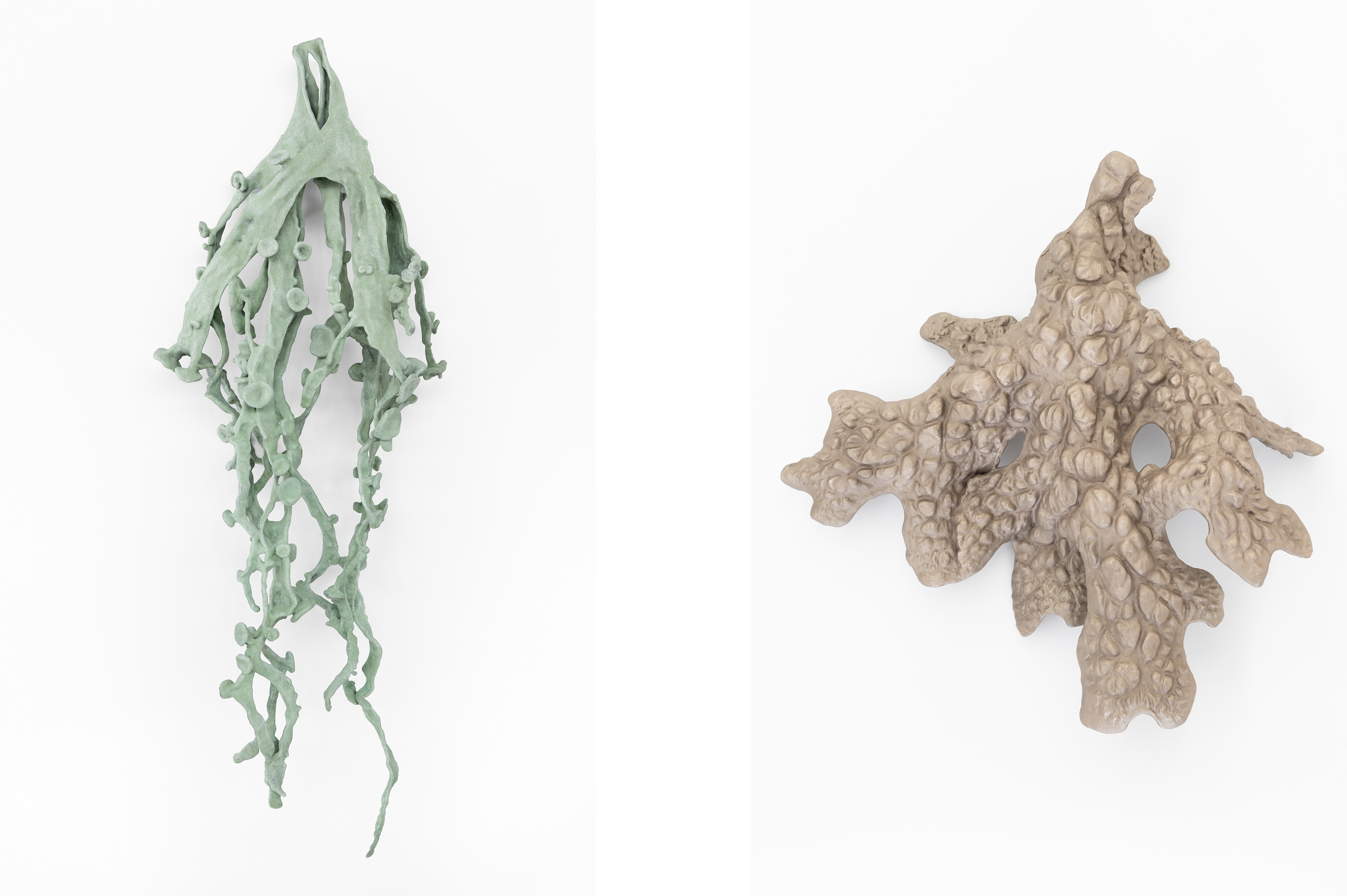
Individual views of bronze sculptures